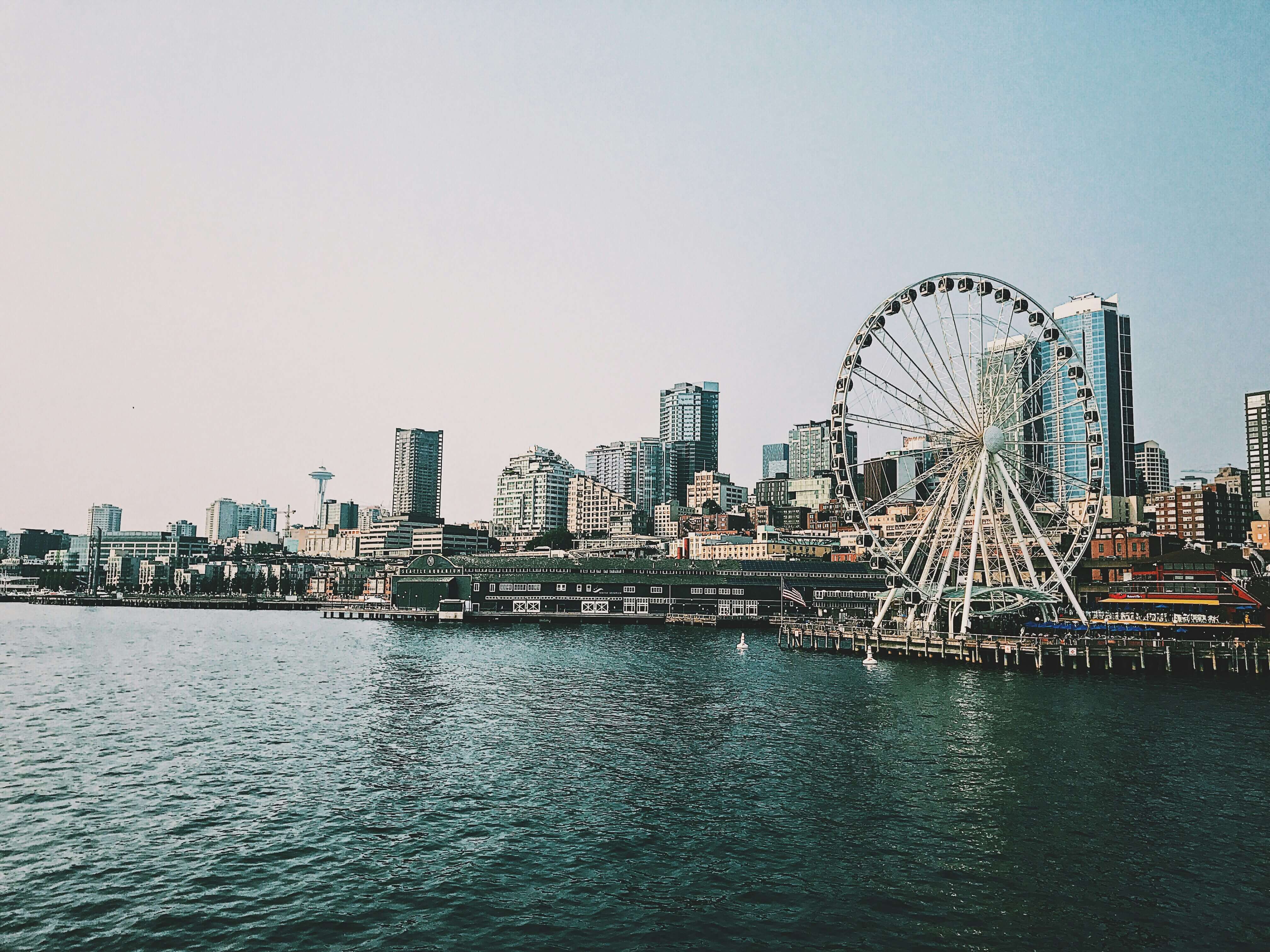
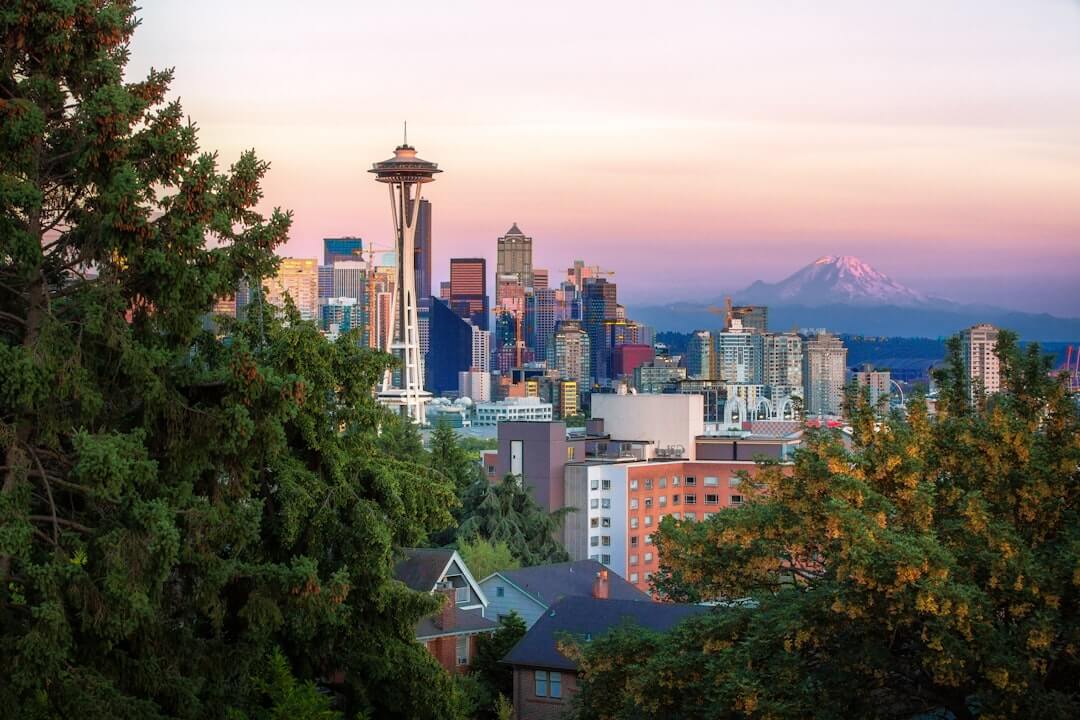
Seattle’s reputation for rain is real eight months of the year — but summer is the exception. July and August are among the driest stretches of any major US city, with long evenings, mild temperatures, and a downtown that finally rewards a walking trip. The version of Seattle most travelers come to see — Pike Place Market in sunshine, ferry rides across Puget Sound, the Space Needle against blue sky, mountains visible in three directions — only reliably exists from late June through September. A trip planned around that window is a different trip from one that lands in November.
Seattle is small, compact, and water-shaped
The first thing to internalize: downtown Seattle is small. Pike Place Market to the Space Needle is a 20-minute walk. The Link light rail covers most of the rest. Capitol Hill, Belltown, South Lake Union, and Pioneer Square all sit within a few kilometers of each other, and the more outlying neighborhoods (Ballard, Fremont, West Seattle) are reachable by bus or rideshare in 20–30 minutes.
The geography that shapes everything:
- Puget Sound to the west — ferries to Bainbridge, Bremerton, the San Juans
- Lake Union and Lake Washington to the east — kayaks, floatplane spotters, the houseboats from Sleepless in Seattle
- The Olympic Mountains and Cascades — visible from much of downtown on clear days
- Seattle’s hills — the city is genuinely hilly, and “five blocks” can mean a hill climb
The version of the trip that works picks one downtown-adjacent base and treats most things as walking or short transit trips from there.
Picking a base: five areas, five different versions of the trip
Belltown — The default first-time base. Walkable to Pike Place Market, the Space Needle, the waterfront, and central downtown. Dense restaurant and bar density, mid-range hotel options, easy Link light rail access at Westlake Station. Strong base for a short, sights-heavy first trip.
Pike Place Market / Downtown core — Hotels closer to the market itself, with views over Elliott Bay. The market is genuinely a working farmers’ market that happens to be a tourist site — staying nearby means morning coffee at Storyville or Le Panier without the crowds. Tradeoff: prices peak here. Strong choice if the market is the trip’s gravitational center.
Capitol Hill — Seattle’s most concentrated neighborhood for restaurants, bars, music, and queer-friendly nightlife. Pike-Pine corridor and Broadway. A short Link ride or 20-minute walk from downtown. Tradeoff: more residential and less “Seattle sights” — you’ll commute to the Space Needle. Strong base for evening-focused trips or a second visit.
South Lake Union — Modern, tech-corridor neighborhood with hotels, the Museum of History & Industry (MOHAI), and walkability to Lake Union. Strong choice for a business trip or for travelers using the South Lake Union streetcar to the rest of downtown.
Pioneer Square — The oldest neighborhood, with historic brick buildings, art galleries, and adjacency to the SODO stadium district (Lumen Field, T-Mobile Park). Tradeoff: some surrounding streets feel rough, and the area empties out at night. Strong choice for travelers anchored around games or events at Lumen Field.
Ballard, Fremont, and West Seattle are worth knowing about as second-base options on longer trips — Ballard for Nordic-heritage food, Fremont for the Sunday Market and the Troll, West Seattle for beach time at Alki. They’re not great first-trip bases because they’re further from the central sights.
Getting around: Link light rail, walking, ferries
Seattle’s transit is unusually good for a US city of its size, and most visitor neighborhoods fall inside it.
Link light rail. The 1 Line runs from Lynnwood north of the city through downtown to Sea-Tac Airport and beyond. The airport-to-downtown ride is 35–40 minutes for $3.00. Inside downtown, stops at Westlake (Belltown access), University Street, Pioneer Square, International District/Chinatown, and Stadium (one-minute walk to Lumen Field). The 2 Line connects downtown to Bellevue and Redmond on the Eastside.
Streetcar. Two short lines — South Lake Union (downtown to SLU) and First Hill (downtown to Capitol Hill). Useful for specific trips, not a general tool.
Buses. Extensive metro bus system. The most useful tourist routes are the RapidRide lines to Ballard, Fremont, West Seattle, and around Capitol Hill.
Ferries. Washington State Ferries from downtown’s Colman Dock to Bainbridge Island (35 minutes) or Bremerton. The Bainbridge round-trip is one of the easiest “see Seattle from the water” experiences in the city — pedestrians ride free returning.
Walking. Real inside downtown, Belltown, Capitol Hill, Pioneer Square, and inside Ballard / Fremont / Wallingford. Crossing between non-adjacent neighborhoods is mostly a transit or rideshare trip.
Driving. Optional. Useful for day trips to Mount Rainier, the Olympic Peninsula, or Snoqualmie Falls. Parking downtown is expensive; traffic on I-5 is bad at rush hour.
A reasonable mix for a first trip: Link from the airport, walking around downtown, ferry for one day, rideshare for evening trips to Ballard or Capitol Hill.
Summer in Seattle: the dry season everyone forgets about
June through September daily highs run 20–28°C (70–82°F) with low humidity and surprisingly little rain. The local saying is that Seattle “wakes up” in July — patios open, festivals start, the waterfront fills, and the city feels like a different place than it does in February.
What this means for planning:
- June can still have cool overcast mornings (the local “June Gloom” pattern). July and August are reliably warm and sunny.
- Long evenings — sunset at 9 p.m. or later through mid-July. Patios run late.
- The mountains and ferries are clearest in late summer (August and September) as the air dries
- Pack a light layer — evenings cool quickly off the water
- No reliable rain to plan around. That’s the surprise.
The one weather-related note: heat waves do happen now — late June and July 2021 set all-time records, and air conditioning is still less common in Seattle homes and small hotels than visitors expect. Check whether a rental or boutique hotel actually has AC if you’re traveling in a hot stretch.
A loose four-to-five-day shape that works
This is the rhythm that produces a good first Seattle summer trip.
- Day 1 (arrival): Link from Sea-Tac to downtown, settle in. Pike Place Market walk in the late afternoon, dinner in Belltown.
- Day 2 (downtown core): Pike Place Market morning (it actually opens early), Space Needle and Chihuly Garden, walk through the waterfront to the Olympic Sculpture Park.
- Day 3 (water day): Ferry to Bainbridge Island for the morning, lunch on the island, return for an afternoon in Pioneer Square.
- Day 4 (Capitol Hill or Ballard): A neighborhood day — Capitol Hill for cafés, restaurants, and Volunteer Park, or Ballard for the Sunday Market, the locks, and seafood.
- Day 5 (longer day out): Mount Rainier (full day, leave early), the San Juan Islands (overnight better), or a slower second-look day in downtown.
For longer trips, easy add-ons are Vancouver by Amtrak Cascades (4 hours, one of the most scenic rides in North America), Mount Rainier or the Olympic Peninsula by car, or Portland by Amtrak (3.5 hours south).
What disappoints first-time visitors
The honest list:
- The Space Needle line is long. Book a timed entry; expect a 60-minute queue otherwise.
- Pike Place Market is busiest 10 a.m. – 3 p.m. Visit at 8 a.m. for a different and better experience.
- The Underground Tour is a tourist trap that some travelers love and others find dated. Pre-research expectations.
- Pioneer Square at night. Some blocks feel empty or unsettling. Stay on the more-trafficked streets after dark.
- Hills. Wear comfortable shoes. “Downtown Seattle is walkable” is true but has an asterisk.
- AC isn’t universal. During heat waves, some rentals will surprise you.
None of this makes Seattle a bad trip. It makes it a city that rewards a summer visit, a walking-and-Link strategy, and the willingness to actually use the ferry as part of the trip rather than admiring it from the shore.
Visiting during the 2026 FIFA World Cup? Lumen Field hosts six matches between June 15 and July 6, including USA vs Australia on Juneteenth. The stadium is downtown — one minute from a Link station — and the city’s distributed fan celebrations stretch from Seattle Center to Pioneer Square. The match-day logistics sit in a separate piece: Where Seattle Already Watches Soccer: Lumen Field at the 2026 World Cup.