
New York is one of the few cities in the world where the right neighborhood matters more than the right hotel. The metro area is vast, the subway shapes which days are possible, and the difference between a great trip and a tired one is usually decided before the plane lands — by which borough you sleep in. The hotel you pick inside that borough matters too, but it’s a second-order question.
New York and New Jersey aren’t quite one place
People talk about “the New York area” as if it were one continuous city. It mostly isn’t. New York and New Jersey sit on either side of the Hudson, well-connected by trains, tunnels, and ferries — but they’re separate systems, separate transit fares, separate states, separate weeknight rhythms.
For a visitor, this matters in two practical ways:
- Where you sleep usually stays in New York. Manhattan and the inner boroughs are denser, more walkable, and offer the kind of experience most people came for. New Jersey is a logistics convenience, not a base for sightseeing.
- Jersey-side neighborhoods (Hoboken, Jersey City) are real, just different. They have their own restaurants, waterfronts, and PATH connection back into Manhattan. They make sense for travelers who want city access at a lower price, or who have a specific reason to be west of the Hudson.
Treat the river as a real boundary, not a suggestion, and most decisions get easier.
Picking a base: five areas, five different versions of the trip
A short list of areas covers most first-time and repeat visitors. The differences are about pace, price, and what your evenings look like — not about which list of sights you can reach.
Midtown Manhattan — Times Square, Bryant Park, Grand Central, easy walks to Central Park. The most touristy choice, but also the most logistically easy: nearly every subway line passes through, Penn Station and the NJ Transit connection to the rest of the region are within walking distance, and most major sights are 10–20 minutes by foot or train. Tradeoff: it can feel relentless, and the food scene isn’t as strong as further south. Choose Midtown for a short, sight-heavy first trip.
Lower Manhattan and the West Village — A calmer Manhattan base. Strong restaurants, walkable blocks, easy access to lower-borough sights (the One World Observatory, Hudson Yards walk, the West Side waterfront). Slightly further from Central Park, slightly more residential. Strong choice for a second visit or for anyone who finds Times Square overwhelming.
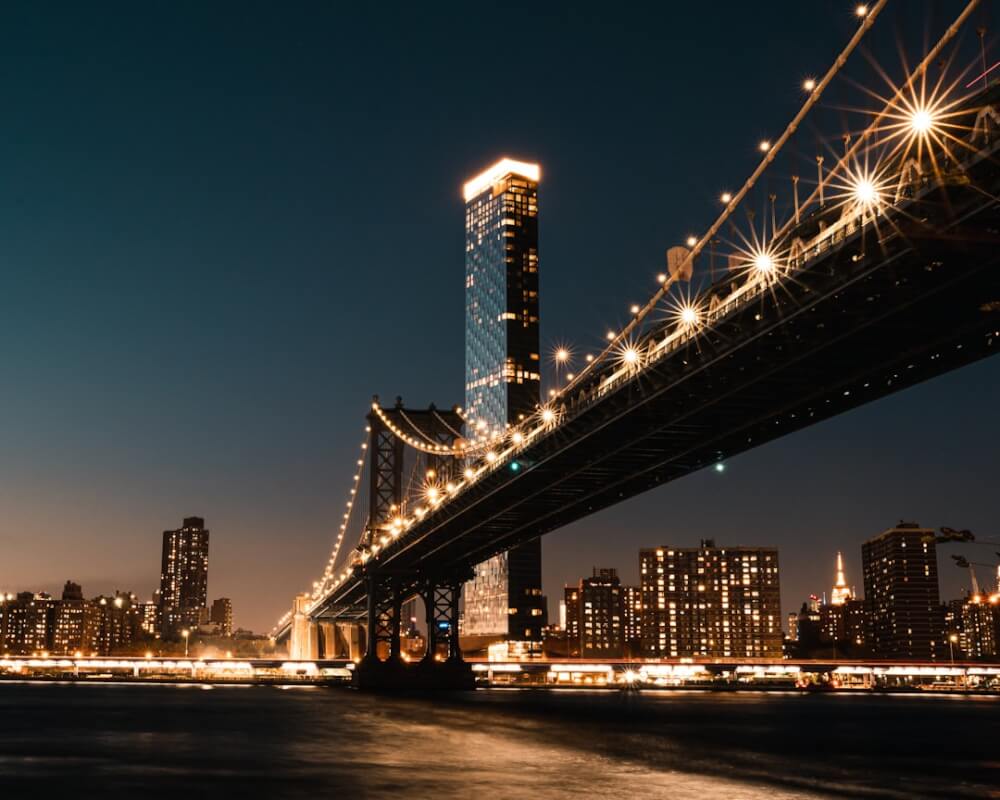
Brooklyn (Williamsburg, Brooklyn Heights, DUMBO) — The neighborhood-feel option. Better cafés, better food per dollar, and a real sense of street life. Williamsburg leans younger and louder; Brooklyn Heights and DUMBO are quieter and more scenic, with the best skyline views from the Promenade. Tradeoff: every Manhattan-side trip becomes a subway ride, not a walk. Choose Brooklyn when the trip is longer than four nights and you want a slower pace.
Long Island City and Astoria, Queens — Underrated. LIC sits one subway stop from Midtown but at noticeably lower prices and with calmer streets. Astoria is further out but is the city’s best Greek and Middle Eastern food neighborhood. Useful as a base for travelers who want New York energy without paying the Manhattan or Williamsburg premium.
Jersey City or Hoboken — The Jersey-side honorable mentions. Both sit across the Hudson with PATH train access to Manhattan in 10–15 minutes, and both work as a less expensive city-adjacent base. The trade-off is real: you’ll cross the river for most evenings, and the post-midnight return can take longer than it should.
Times Square hotels are not the same as Midtown hotels. The streets around Broadway and 7th Avenue are loud and chaotic well into the night; the side blocks east toward Bryant Park are much calmer and only a few minutes’ walk to the same trains.
Getting around without losing half your day
New York is one of the few US cities where a car is actively worse than transit. The subway, despite the complaints locals make about it daily, is the right tool for almost every visitor day.
The subway. Base fare is $3.00 (paid via OMNY tap-and-ride; the old MetroCard system was retired at the end of 2025). A 7-day fare cap means you’ll never pay more than $35 in a week. The system runs 24/7, though late-night service is slower and patchier. Lines you’ll actually use for first-time sightseeing: the 1/2/3 for the West Side, the 4/5/6 for the East Side and Lower Manhattan, the N/Q/R for Times Square and Brooklyn, the L for Williamsburg.
PATH. A separate rail system run by the Port Authority that connects Manhattan (33rd Street, World Trade, Christopher Street, 9th Street, 14th Street, 23rd Street) with Jersey City, Hoboken, and Newark. $3.00 per ride. The right tool if you’re staying in Jersey or going to Hoboken for dinner.
NJ Transit. The commuter rail used to reach the Meadowlands sports complex, Newark Liberty Airport, and points across New Jersey. Outside specific events, most visitors will never touch it.
Ferries. NYC Ferry covers waterfront routes from Wall Street and East 34th Street to Brooklyn, Queens, and Roosevelt Island. Less practical for day-to-day movement, but a worthwhile sightseeing alternative for one trip in good weather.
Walking. Manhattan is more walkable than people realize. A 20-block stretch (one mile) takes about 20 minutes. Many first-time trips work best when subway is used for long jumps and walking covers everything in between.
Uber and yellow cabs. Useful for late nights, group movement, and any trip with luggage. Surge pricing is real during big events; walk a few blocks before requesting one in dense neighborhoods.
A reasonable mix for a first trip: OMNY tap for everything during the day, Uber for late nights or after rain, walking whenever possible.
Summer in New York: humidity, July weekends, and what the weather actually feels like
New York summers are humid in a way that surprises visitors from drier or cooler climates. Mid-June through mid-August averages 26–32°C (high 70s to low 90s°F), with humidity often pushing the felt-temperature higher. Afternoon thunderstorms are common; full-day rain is not.
Practical notes:
- Late June through early July is the hottest stretch. Schedule outdoor sightseeing — Central Park walks, the High Line, ferry rides — for mornings or after 5 p.m. Plan museums (the Met, MoMA, the American Museum of Natural History) into the middle of the day.
- The Fourth of July weekend (July 3–5) is one of the busiest of the year for the city: fireworks crowds on both rivers, hotels at peak prices, restaurants at peak demand.
- August softens. It stays hot, but many New Yorkers leave, and weeknights feel slightly less crowded.
The good news: New York’s restaurants, museums, and indoor culture are some of the best places in the world to spend a hot afternoon. The infrastructure handles bad weather better than most cities.
A loose five-to-seven-day shape that works
This isn’t a checklist. It’s the rhythm that consistently produces a good first New York trip without overscheduling.
- Day 1 (arrival): Land, settle into the base. Walk the immediate neighborhood, eat dinner without booking somewhere ambitious.
- Day 2 (Midtown core): Central Park, the Met or MoMA, a meal in the West Village or Chelsea. Don’t try to also do Lower Manhattan.
- Day 3 (Lower Manhattan): One World Observatory or Statue of Liberty ferry, walk the Brooklyn Bridge if weather cooperates, dinner in Brooklyn Heights or DUMBO.
- Day 4 (Brooklyn or Queens neighborhood day): Williamsburg, Smorgasburg if it’s a weekend, Long Island City waterfront, or a food crawl in Astoria.
- Day 5 (Upper Manhattan or a side trip): Upper East Side museums + Harlem afternoon, or a Hudson Valley day via Metro-North.
- Day 6–7 (slower add-ons): A second museum, a Coney Island half-day, a Long Island City evening, or a Hoboken/Jersey City dinner if curiosity calls.
For a longer trip, the easy add-ons are a Hudson Valley day (Storm King or Beacon by Metro-North), a Long Beach or Rockaway beach day by subway, or a Philadelphia day via Amtrak.
What disappoints first-time visitors
The honest list:
- The walking is more than expected. Most days end up with 15,000–25,000 steps. Comfortable shoes are not optional.
- Restaurant booking matters more than people think. The best places book 2–4 weeks ahead. If a specific restaurant is on the trip’s must-list, book before you fly.
- The subway has uneven days. Most rides are smooth; some go wrong (signal problems, delays, hot cars in summer). Build buffer into anything time-critical.
- Times Square is a passing-through place, not a destination. Even most New Yorkers avoid it. Walk through once, see the lights, move on.
- The Statue of Liberty ferry takes longer than the brochure suggests. Plan a half-day, not two hours. The Staten Island Ferry (free) covers the views without the time investment.
None of this makes New York a bad trip. It makes it a trip that rewards a clear base, a flexible pace, and the willingness to walk past a famous block in favor of a quieter one a few streets over.
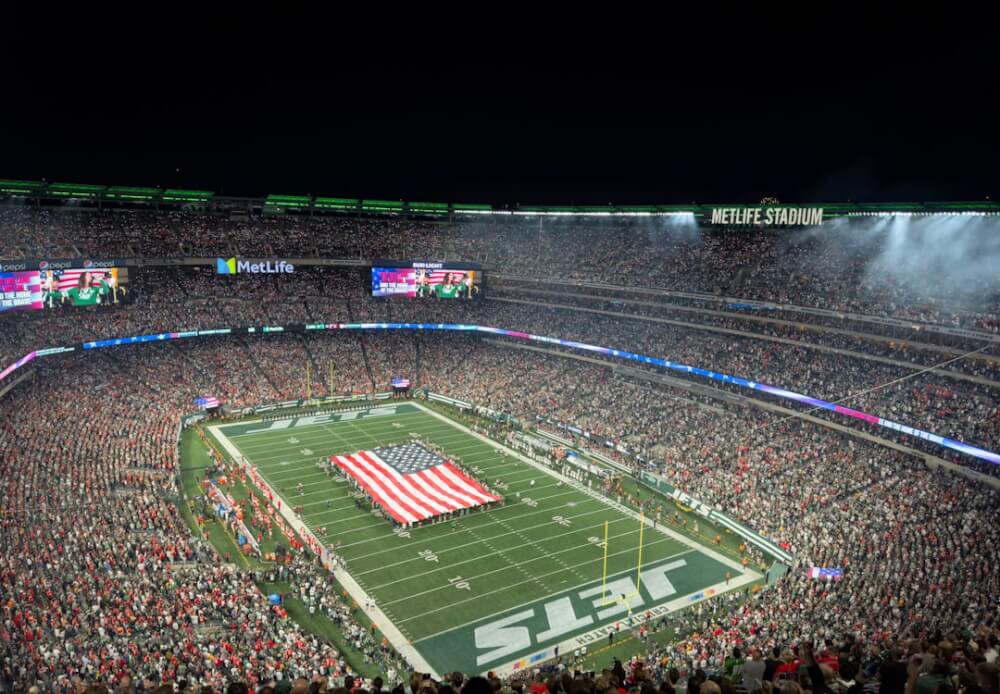
Visiting during the 2026 FIFA World Cup? MetLife Stadium hosts eight matches between June 13 and July 19, including the final. The stadium is in East Rutherford, New Jersey — not New York — and the match-day logistics (NJ Transit’s capped Penn Station service, the fan zones across the boroughs, where to base for the final) sit in a separate piece: MetLife Stadium and the 2026 World Cup Final.