
Miami is hotter, wetter, and more spread out than its postcards suggest. The best trips here pick a single neighborhood as a base, treat the heat as a schedule constraint rather than a backdrop, and accept that the city most visitors imagine is only one part of a much larger region. A great Miami week is rarely about doing more things — it’s about doing fewer, slower, and in the right part of the day.
Miami is a region, not a single neighborhood
Two facts shape almost every decision a first-time visitor makes.
The first is the scale. “Miami” usually refers to the metropolitan area, which sprawls north for 50 kilometers and includes a dozen distinct cities. Miami Beach is its own incorporated city; so are Miami Gardens (to the north), Coral Gables, Hialeah, Aventura, and Sunny Isles. They all sit in the same region but operate as separate places. Trying to plan around “Miami” as if it were one walkable destination falls apart quickly.
The second is the heat. June through September averages run 27–33°C (low 80s to low 90s°F) with humidity that pushes the felt temperature higher. Most afternoons see at least one thunderstorm — sometimes a 20-minute downpour, sometimes a longer evening. Outdoor plans that ignore this rhythm pay for it in fatigue.
The version of the trip that works picks one base, treats most days as 20–30 minutes around it, and uses heat- and weather-aware scheduling. Two cross-town moves in a day is one too many in July.
Picking a base: five neighborhoods, five different versions of the trip
The differences between Miami’s main bases are sharper than in most US cities. They aren’t just “different parts of the same town” — they’re different trips.
South Beach (Miami Beach) — The iconic choice. Art Deco streets, the beach itself, Lincoln Road, Ocean Drive, walkable evenings. The most car-free option if your week is mostly beach and nightlife, and the easiest neighborhood for a first visit. Tradeoff: Ocean Drive is loud and tourist-heavy, mainland sights (Wynwood, Brickell, Coconut Grove) all require a 20–40 minute crossing, and prices skew high. Choose South Beach for a short, beach-anchored first trip.
Brickell — Miami’s vertical core. High-rises, Michelin-level restaurants, rooftop pools, and the most genuinely walkable neighborhood on the mainland. Connected to Downtown by the free Metromover and to South Beach by a 15–20 minute drive. Tradeoff: it leans business and luxury — no beach, less of the colorful Miami most visitors imagine. Strong base for a second visit, a city-focused trip, or for travelers who want to walk to Bayfront Park (it’s a short walk or one Metromover stop away).
Wynwood — Murals, breweries, design galleries, and a denser-feeling street life than anywhere else on the mainland. Best for a younger or food-focused trip; weaker for families or anyone needing easy beach access. Limited walking radius — you’ll still ride to most other things.
Coconut Grove — Miami’s oldest and leafiest neighborhood. Bayfront, tropical, slower, with a small walkable village center. Quiet evenings, good restaurants, calmer hotel feel. Tradeoff: not for nightlife seekers, and the cross-town trips to Wynwood or Miami Beach add up. Choose this for a calmer week, families, or for a second base on a longer trip.
Downtown Miami / Bayfront — Underrated. Sits between Brickell and the Performing Arts District, gives walkable access to the bay, Pérez Art Museum, Bayside Marketplace, and a strong Metromover loop. Less nightlife-dense than South Beach or Wynwood, but the best base if you want to walk to bayfront events and museums without a car.
Skip downtown blocks east of I-95 and parts of Overtown late at night unless you have a specific reason — the rest of Miami’s main tourist neighborhoods are well-patrolled and generally comfortable.
Getting around when the city is built for cars
Miami’s transit is real but limited, and most travelers end up using a mix of rideshare, transit, and walking inside their base neighborhood.
Rideshare (Uber / Lyft). The default for most cross-town trips. A South Beach to Wynwood ride is usually 20–30 minutes and $15–25 outside surge times. Surge pricing is real around match days, big events, and Friday/Saturday nights.
Metromover. A free elevated loop through Downtown, Brickell, and Omni — useful for any day spent in those neighborhoods. Runs frequently, no fare. Won’t get you to the beach or to Wynwood, but inside its loop it’s the most efficient way to move.
Metrorail. A north-south line connecting Downtown / Brickell to the airport (via a transfer) and the southern suburbs. Useful for the MIA airport run and a few specific trips.
Tri-Rail. A regional commuter line running north to Fort Lauderdale and West Palm Beach. Cheap ($2.50–$6.90 one-way).
Brightline. The privately operated higher-speed rail that connects Miami Central (downtown), Aventura, Fort Lauderdale, West Palm Beach, and Orlando. Useful for day trips to Fort Lauderdale or West Palm Beach.
Walking. Real inside South Beach (especially Collins / Ocean / Lincoln), inside Brickell, and inside Wynwood. Crossing between those neighborhoods isn’t walkable.
Renting a car. Optional. The trip works without one if your base is South Beach, Brickell, or Downtown. Useful if you want to do day trips (Everglades, Keys, Fort Lauderdale) or stay in Coconut Grove or Coral Gables.
Summer in Miami: heat, daily storms, and the hurricane edge
Three things to internalize about June through September in Miami:
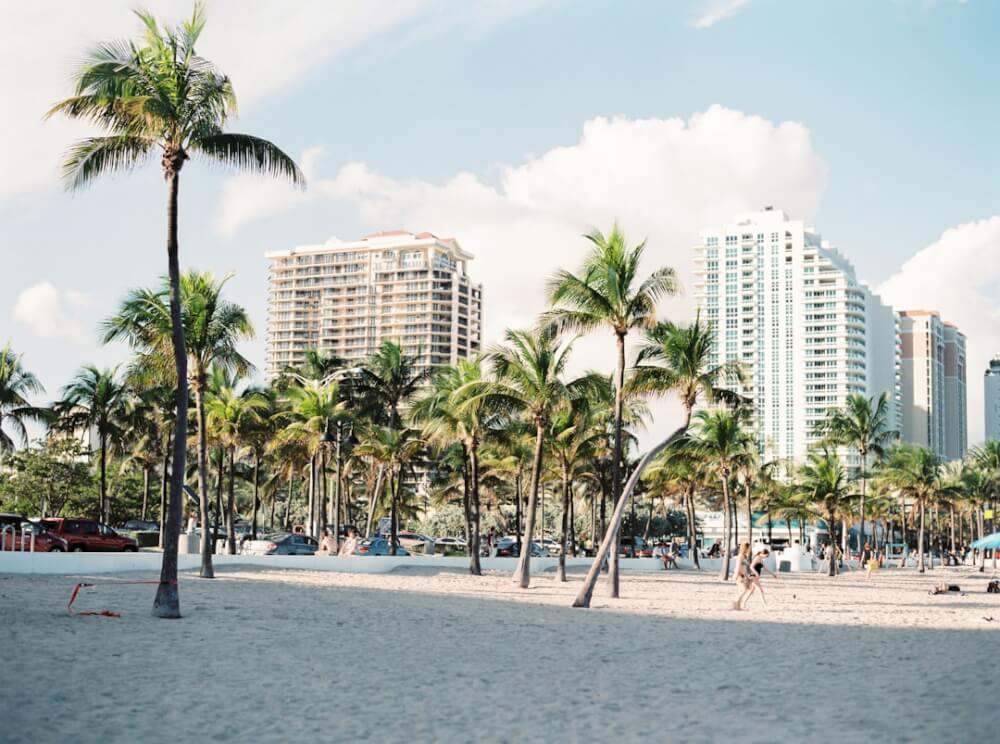
- It is hot all day. Mornings start warm (26–28°C) and peak in the high 80s to mid-90s°F by mid-afternoon. The cooling effect of the ocean is real on the beach itself but doesn’t reach inland Brickell or Wynwood.
- Afternoon storms are daily. Most days see at least one thunderstorm, typically between 2 p.m. and 6 p.m. Plan outdoor activities for mornings; keep afternoons flexible. The storms usually clear by evening.
- Hurricane season opens June 1 and peaks August–September. Named storms are rare in June and early July, but the first storm of the year is increasingly common in June. Watch the National Hurricane Center forecast in the week before you fly; storm risk is low but not zero.
The practical schedule:
- Beach time in the morning or late afternoon
- Indoor or shaded activities mid-day (museums, food halls, hotel pool with shade)
- Outdoor evenings — most Miami restaurants and bars open up after 7 p.m. as the day cools
A loose five-day shape that works
This is a rhythm, not a checklist. It spreads heat-heavy days across recovery days so the week doesn’t compress into exhaustion.
- Day 1 (arrival): Land, settle into the base. Neighborhood walk in the evening, dinner without an ambitious plan.
- Day 2 (beach + your base): Morning beach (South Beach, Sunny Isles, or Key Biscayne depending on base), shaded lunch, slow afternoon, dinner walking distance.
- Day 3 (Wynwood): Murals, breweries, food crawl, gallery night. Treat this as a full afternoon-into-evening day.
- Day 4 (cross-town day): Vizcaya Museum, Coconut Grove walk, late-day Bayside or Bayfront Park.
- Day 5 (Brickell + Bayfront): Brickell food, Metromover to Bayfront Park, Pérez Art Museum, late sunset on the bay.
For longer trips, the easy add-ons are the Everglades (full day, leave early), the Keys (Key Largo for a day, Key West for a 2–3 day side trip), or a Fort Lauderdale or West Palm Beach day via Brightline.
What disappoints first-time visitors
The honest list:
- The heat is real. Underestimating it is the most common Miami mistake. Hydrate aggressively, schedule outdoor time at the edges of the day, and don’t push through.
- Cross-town trips eat the day. The map looks compact; the experience isn’t. Two big cross-town moves a day is one too many.
- South Beach is louder than expected. Ocean Drive runs near-continuous nightlife. If you want sleep, book a hotel one or two blocks away from Ocean.
- Restaurants need reservations. Brickell, Wynwood, and the better South Beach restaurants book 1–3 weeks ahead.
- Sundays in some neighborhoods are quieter than expected. Wynwood especially has a different rhythm Sunday — many galleries closed, some restaurants on reduced hours.
None of this makes Miami a bad trip. It makes it a city that rewards planning around its actual rhythms: hot midday, evening energy, water as a feature rather than a backdrop, and the willingness to let the calendar bend around the weather.
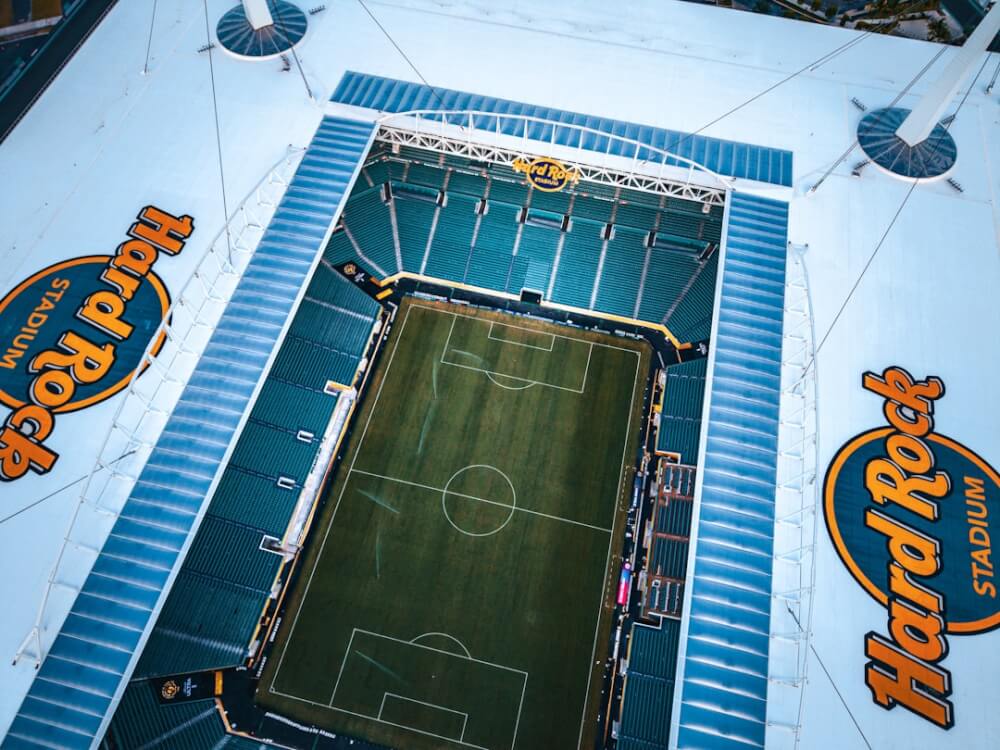
Visiting during the 2026 FIFA World Cup? Hard Rock Stadium in Miami Gardens hosts seven matches between June 15 and July 18, including the bronze final. The match-day logistics (Brightline, the free shuttle network, the Bayfront Park Fan Festival) sit in a separate piece: Hard Rock Stadium for the 2026 World Cup.