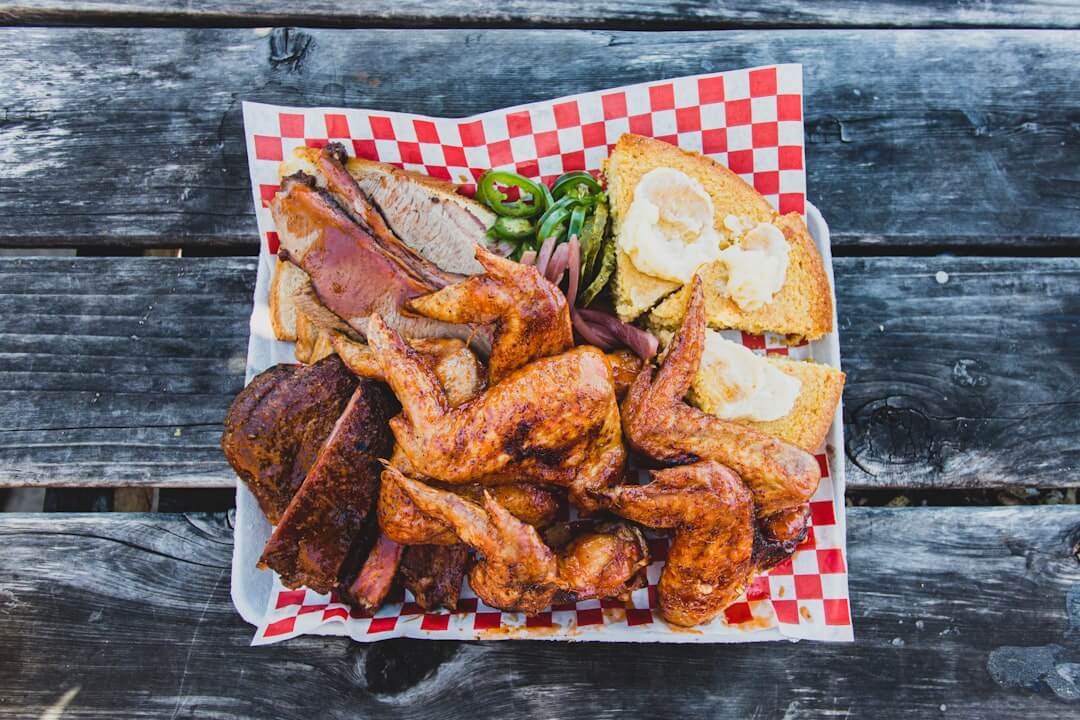
Kansas City is two cities that share a name and a state line — Kansas City, Missouri (the bigger half, where most visitors stay) and Kansas City, Kansas. The metro is mid-sized, the food is better than its reputation suggests, and the trip works best when it leans into what KC actually does well: barbecue, jazz, walkable inner neighborhoods, and a streetcar that’s been quietly growing for years. A 3–4 day visit is the right size for most travelers — long enough to do the city right, short enough not to run out of new neighborhoods.
Kansas City is a mid-sized city, mostly on the Missouri side
The thing first-time visitors usually need to be told: when people say “Kansas City,” they almost always mean Kansas City, Missouri. That’s where Arrowhead Stadium is, where the Plaza is, where the jazz history sits, where the streetcar runs. Kansas City, Kansas (KCK) is across the state line — smaller, mostly residential, with a few specific draws (Strawberry Hill, the soccer-stadium suburb area) but not where you base a vacation.
For visitors, the practical KC is concentrated in a corridor running from River Market in the north, through Downtown, Crossroads Arts District, Westport, Country Club Plaza, and out to the 39th Street / Brookside / Waldo stretches further south. The KC Streetcar — recently extended south toward UMKC — covers most of this corridor.
Where the city actually lives:
- River Market — the streetcar’s northern end, with the City Market (one of the Midwest’s largest farmers markets), a riverfront, and walkable streets
- Crossroads Arts District — galleries, restaurants, First Fridays art crawl, the heart of KC’s contemporary culture
- Power & Light District — downtown’s entertainment cluster (bars, concert venues, the T-Mobile Center)
- Westport — historic, walkable, brunch and nightlife
- Country Club Plaza — the Plaza shopping district, the city’s most upscale stretch
- 18th & Vine — the jazz history district, with the American Jazz Museum and the Negro Leagues Baseball Museum
Picking a base: four areas, four different versions of the trip
Crossroads Arts District / Downtown — The default first-time base. Streetcar access along Main Street, walking distance to Power & Light District nightlife, the Crossroads galleries, and central restaurants. Hotel options skew modern. Strong base for a short, transit-and-streetcar-heavy trip.
Country Club Plaza area — The Plaza is KC’s most polished area, with shopping, restaurants, and easy access to Westport and the Nelson-Atkins Museum of Art. Hotels are denser here than anywhere else south of downtown. Tradeoff: it’s a 15-minute streetcar ride or Uber from the downtown nightlife. Strong base for a shopping-and-museum-focused trip.
Westport — Historic, tree-lined, with strong restaurants and music venues. Walking distance to the Plaza. Hotel options are limited (more Airbnb-friendly). Strong choice for a longer trip or a music-focused itinerary.
River Market — The northern end of the streetcar line, with the City Market and a quieter residential feel. Walkable inside the neighborhood; you’ll streetcar or Uber for most other trips. Strong choice for travelers who want a calmer base with farmers-market mornings.
18th & Vine is a daytime destination, not a base — the historic jazz district is essential to visit, but the surrounding blocks empty out at night and hotel options are essentially nonexistent.
Getting around: the streetcar, walking, and rideshare
KC’s transit is real but mostly handled by one growing piece of infrastructure.
KC Streetcar. Free. Runs north-south along Main Street from River Market through Downtown, Crossroads, and (as of late 2025) further south toward the Plaza and UMKC. The streetcar is the easiest way to move between most of the visitor neighborhoods.
RideKC buses. A wider bus network covering the metro. Less useful for first-time visitors than the streetcar but useful for specific trips (18th & Vine, the Nelson-Atkins, some southern neighborhoods).
Rideshare (Uber / Lyft). The default for cross-neighborhood trips outside the streetcar line. Affordable.
Walking. Real inside Crossroads, River Market, the Plaza, Westport, and 18th & Vine. Crossing between non-adjacent districts is mostly a streetcar or Uber trip.
Driving. Optional. Useful for the Nelson-Atkins (free admission, free parking), 18th & Vine, and trips out of the city. Parking downtown is plentiful and reasonably priced.
A reasonable mix for a first trip: streetcar inside the central corridor, Uber to 18th & Vine and the Nelson-Atkins, walking inside the base neighborhood.
Summer in Kansas City: hot, humid, and the season the city’s set up for
June through August daily highs run 27–34°C (low 80s to low 90s°F) with humidity that pushes felt-temperature into the high 90s. Thunderstorms are frequent — often dramatic, usually brief. The city’s outdoor patios and street-level energy are at peak during summer evenings.
What this means for planning:
- Outdoor music and patios come alive after 6 p.m.
- Mid-day works for indoor activities: the Nelson-Atkins, the Jazz Museum, the Negro Leagues Baseball Museum, food halls
- Afternoon storms are common — quick downpours rather than all-day rain
- The Plaza fountains are at their best in summer (and lit dramatically at night)
The wrinkle: KC sits in Tornado Alley. Tornadoes in summer (especially May and June) are rare but real. Tornado warnings (rather than watches) require taking shelter — most hotels and restaurants have protocols.
A loose three-to-four-day shape that works
This is the rhythm that produces a good first KC trip.
- Day 1 (arrival): Land at MCI, settle into the base. Evening at River Market or in Crossroads, low-effort BBQ dinner (Q39, Joe’s KC, or Arthur Bryant’s are all good first-night options).
- Day 2 (jazz + history day): Morning at 18th & Vine — American Jazz Museum, Negro Leagues Baseball Museum. Lunch at one of the historic BBQ joints (Gates BBQ, Arthur Bryant’s). Afternoon at the Nelson-Atkins Museum (free, world-class collection). Evening in Westport for live music.
- Day 3 (Plaza + Crossroads): Morning shopping or coffee in the Plaza, lunch in the area, afternoon at the Crossroads First Fridays (if timing aligns) or Union Station. Evening in Crossroads.
- Day 4 (River Market + side trip): City Market morning, lunch at one of the market vendors, optional day trip to Independence (Truman Library) or a slower second look at favorite neighborhoods.
For longer trips, the easy add-ons are Lawrence, Kansas (45 minutes west, a college town with strong food), Topeka (Kansas state capital, historic interest), or the Flint Hills (the tallgrass prairie, requires a car).
What disappoints first-time visitors
The honest list:
- The metro sprawls. Downtown KCMO is dense, but the city stretches in every direction. Pick a base on the streetcar.
- Tourist BBQ vs. local BBQ is a real distinction. The famous places (Arthur Bryant’s, Gates, Joe’s KC) are real food but have lines. Ask locals about Q39, Slap’s BBQ (in KCK), and the lesser-known joints.
- Westport gets loud Friday-Saturday. If you want a quiet hotel night, base in Crossroads or the Plaza instead.
- The Plaza Lights (Thanksgiving through January) are a winter draw — summer visitors miss them.
- 18th & Vine isn’t a neighborhood to wander after dark. Visit during the day; the museums close in the early evening.
- The streetcar is free but slow. It’s faster to walk between adjacent downtown stops; the streetcar wins over longer stretches.
None of this makes Kansas City a bad trip. It makes it a city that rewards a streetcar-anchored base, a real BBQ research pass, and one full day on the jazz history.
Visiting during the 2026 FIFA World Cup? Arrowhead Stadium hosts six matches between June 16 and July 11, including a quarter-final — and Kansas City literally built a new transit system (ConnectKC26) for the tournament because the stadium has no rail connection. The match-day logistics, the WWI Museum Fan Festival, and the Power & Light District watch parties sit in a separate piece: Built for the World Cup: How Kansas City’s ConnectKC26 Reaches Arrowhead Stadium.