
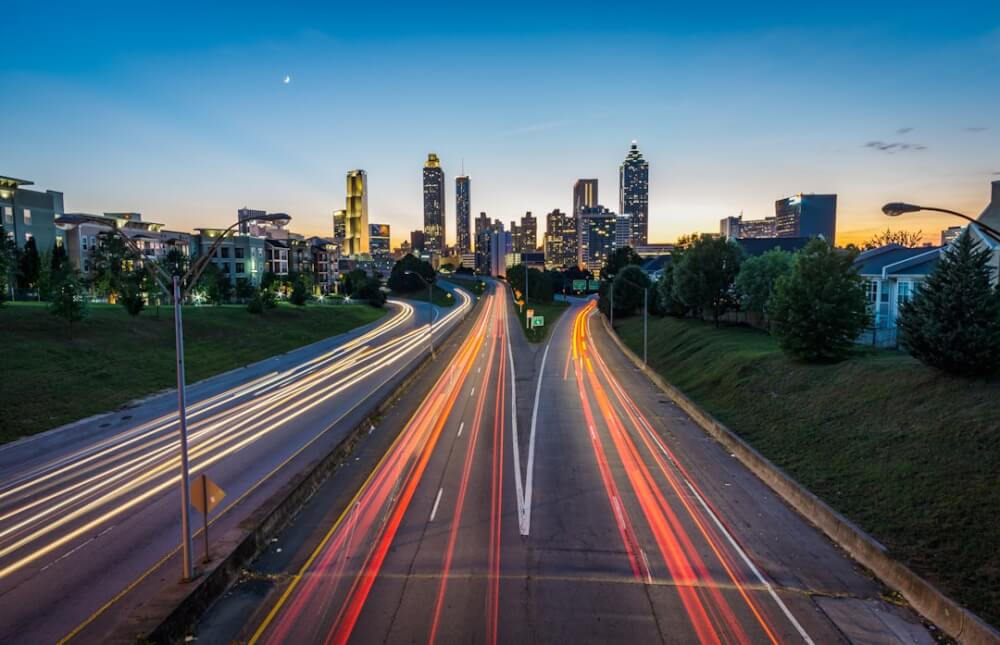
Atlanta doesn’t really happen in its skyline. The interesting stuff is in the neighborhoods that ring downtown — Midtown, Old Fourth Ward, Decatur, Inman Park — and increasingly along the Beltline, the city’s converted-rail trail that has become its main urban feature. A good Atlanta trip plans around that, not against it. Visitors who treat the downtown core as the destination usually leave underwhelmed; visitors who use the neighborhoods and the Beltline tend to like the city more than they expected to.
Atlanta is a city of neighborhoods, not a downtown
The first thing to internalize: downtown Atlanta is a daytime business district, not an evening destination. Centennial Olympic Park, the World of Coca-Cola, the Aquarium, the CNN Center, the King Center — they’re all there, and they make a perfectly good half-day or full-day visit. But almost no Atlantans go downtown for dinner, drinks, or weekends.
Where the city actually lives:
- Midtown — restaurants, the High Museum of Art, the Fox Theatre, Piedmont Park, MARTA at every corner
- Old Fourth Ward — Ponce City Market, the Beltline’s busiest stretch, breweries
- Inman Park / Virginia-Highland / Little Five Points — older walkable neighborhoods, food, indie shops
- Buckhead — north of the rest, polished, restaurants and shopping
- Decatur — a small adjacent city with its own town square and MARTA access
- West Midtown — design district, breweries, newer restaurant cluster
The version of the trip that works picks one of these as a base and treats downtown as a daytime excursion.
Picking a base: five areas, five different versions of the trip
Midtown — The default for first-timers. The most walkable neighborhood in the city, MARTA at three stations (Arts Center, Midtown, North Avenue), restaurants and bars within blocks, and Piedmont Park as a daily backdrop. Tradeoff: high-rises and corporate energy, less of the “Southern neighborhood” feel some travelers come looking for. Strong base for a short trip or a transit-only week.
Old Fourth Ward / Beltline corridor — A more character-rich base built around the eastern stretch of the Beltline. Ponce City Market is the gravitational center: food hall, restaurants, rooftop with mini-golf and city views. Walk or bike north and you reach Inman Park; south and you reach Reynoldstown. Tradeoff: hotel options are thinner here, and MARTA is a few blocks west rather than at the doorstep. Strong base for a second visit or for travelers who want the Beltline as their daily route.
Buckhead — Atlanta’s polished, residential-feeling northern district. Restaurants, shopping (Lenox Square, Phipps Plaza), upscale hotels. MARTA access at Lenox and Buckhead stations. Tradeoff: less walkable than Midtown, further from the Beltline. Choose Buckhead for a business-style trip or when shopping and quieter streets matter more than nightlife.
Decatur — A small, walkable city adjacent to Atlanta proper, with its own MARTA stations (Decatur, East Lake). Town square, indie restaurants, slower pace, good food. Tradeoff: trips to anywhere else in Atlanta become a MARTA ride. Strong base for travelers who want a quieter base and don’t mind transit time.
West Midtown — Newer, design-district feel, with breweries, food halls (Westside Provisions), restaurants spread along a few blocks. Tradeoff: limited MARTA — you’ll need rideshare for most trips out. Choose this for a longer or food-focused trip where you don’t mind paying for Ubers.
Downtown hotels exist and do their job — they’re an option for travelers focused on Centennial Olympic Park or a convention. They aren’t a base for getting to know Atlanta.
The Beltline is the city’s defining feature
The Atlanta Beltline is a 22-mile loop (when complete) of former rail corridor converted to trail, parks, and adjacent development. The Eastside Trail — running from north of Piedmont Park down through Old Fourth Ward to Reynoldstown — is the most-developed segment and the easiest entry point. The Westside Trail is quieter, less developed, and more of a local-feeling walk. The Northside Trail opened more recently and is still building density.
For a first visit, the practical pitch:
- A morning walk from Piedmont Park south along the Eastside Trail to Ponce City Market is one of the easiest “this is Atlanta” experiences in the city.
- Bike rental is widespread, and the trail is wide and flat — biking is the fastest way to cover more of it.
- The Beltline is also where many of Atlanta’s newer restaurants, breweries, and breweries-with-food cluster. It functions as a linear neighborhood, not just a trail.
If you only do one Atlanta thing besides the downtown sights, do this.
Getting around
MARTA. Atlanta’s rail-and-bus transit system. Two intersecting heavy-rail lines (north-south and east-west) cover the airport, downtown, Midtown, Buckhead, and Decatur. Fares are $2.50 per ride. Reasonably reliable for getting between the main visitor areas; less useful in the Beltline-anchored eastern neighborhoods, which sit between rail lines. The airport-to-downtown ride is one of the simplest in any US city — direct, 15 minutes, no transfer.
Rideshare (Uber / Lyft). Common, affordable. The default for trips between non-MARTA-connected neighborhoods (West Midtown, the Beltline corridor, Inman Park-to-Buckhead, etc.).
Walking. Real inside Midtown, inside Decatur, inside Inman Park / Virginia-Highland, and along the Beltline. Less real downtown (most blocks empty out after 6 p.m.) or across Buckhead’s wider boulevards.
Driving. Easier than locals make it sound, but parking near the popular neighborhoods (Ponce City Market, Decatur, Virginia-Highland) on weekends can be slow. I-285 (“the Perimeter”) loops the metro and is busy during rush hours.
A reasonable mix for a first trip: MARTA from the airport and for Midtown/downtown/Buckhead/Decatur days, walking inside the base neighborhood, the Beltline for one or two days, rideshare for everything else.
Summer in Atlanta: heat, humidity, and afternoon thunderstorms
June through September daily highs run 28–34°C (mid-80s to mid-90s°F) with humidity that makes the felt-temperature noticeably higher. Afternoon thunderstorms are common — frequent enough to plan around, brief enough that they rarely cancel a day. The city handles the heat with shaded streets in the older neighborhoods (Virginia-Highland, Decatur, Inman Park have real tree cover), and indoor air-conditioned everything.
What this means for planning:
- Beltline walks and outdoor neighborhood time sit better in mornings or after 5 p.m.
- Mid-day works for the High Museum, the King Center, the World of Coca-Cola, the Aquarium — air-conditioned, easy
- Restaurant patios open up after the storms pass — many of the best evenings in Atlanta start at 7 or 8 p.m.
Spring (March–May) and fall (October–November) are kinder weather but more crowded for major events. Summer is the price for fewer tourists in many neighborhoods.
A loose four-to-five-day shape that works
This is the rhythm that consistently produces a good first Atlanta trip without overscheduling.
- Day 1 (arrival): Land at ATL, MARTA to the base. Settle in. Neighborhood walk in the evening, low-key dinner.
- Day 2 (Midtown or Beltline): Either a Midtown day with the High Museum, Fox Theatre area, and Piedmont Park, or a Beltline day with Ponce City Market lunch and an Inman Park dinner.
- Day 3 (downtown): Centennial Olympic Park, the World of Coca-Cola or the Georgia Aquarium, the King Center and the Martin Luther King Jr. National Historical Park. Treat this as a full half-day, then return to the base for the evening.
- Day 4 (Decatur or West Midtown): A slower day in a second neighborhood — Decatur’s town square or West Midtown’s restaurant cluster.
- Day 5 (longer day out): Stone Mountain, a Beltline biking morning, or a side trip to Athens for college-town food and music.
For a longer trip, the easy add-ons are Savannah (4-hour drive south, historic and walkable), the North Georgia mountains (hiking and a quieter base), or a Beltline-and-breweries full day.
What disappoints first-time visitors
The honest list:
- Downtown isn’t where the city happens. Most tourist photos are of the skyline; almost nothing memorable happens at street level downtown after work hours.
- Traffic is real. I-75/I-85 through downtown and I-285 around the metro are slow at rush hour. Plan around it or use MARTA.
- The walking radius inside each neighborhood is small. Atlanta’s neighborhoods are walkable, but the spaces between them aren’t.
- Summer heat is closer to Miami than to Boston. Visitors expecting “Southern but mild” get a different reality.
- Restaurant booking matters. The best dinners book 1–3 weeks ahead; the most-hyped places, longer.
None of this makes Atlanta a bad trip. It makes it a trip that rewards picking a base, using the Beltline as a route rather than a side attraction, and treating downtown as the daytime excursion it actually is.
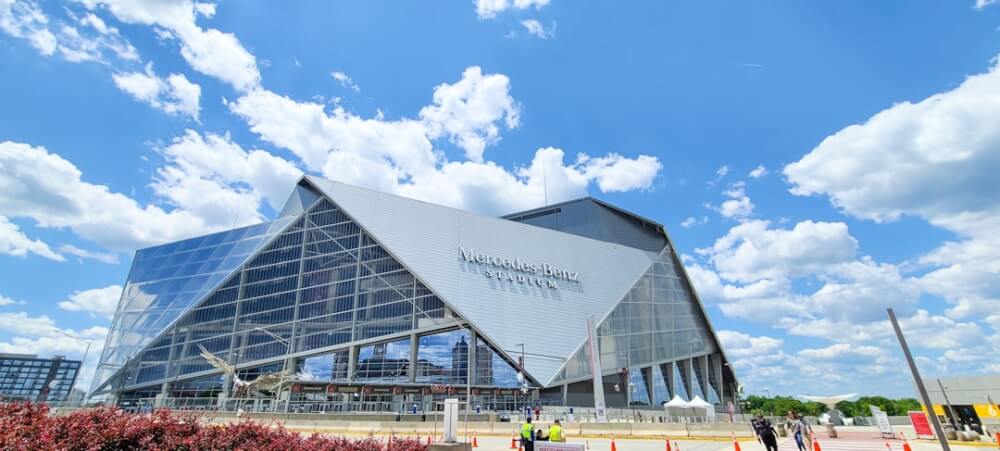
Visiting during the 2026 FIFA World Cup? Mercedes-Benz Stadium hosts eight matches between June 15 and July 15, including a semifinal — and unusually for a US World Cup venue, it sits right in downtown Atlanta, walking distance from the official Fan Festival at Centennial Olympic Park and one stop from MARTA. The match-day logistics sit in a separate piece: The Downtown Semifinal: Mercedes-Benz Stadium at the 2026 World Cup.